15 October 2024
by Andrei ALECSESCU
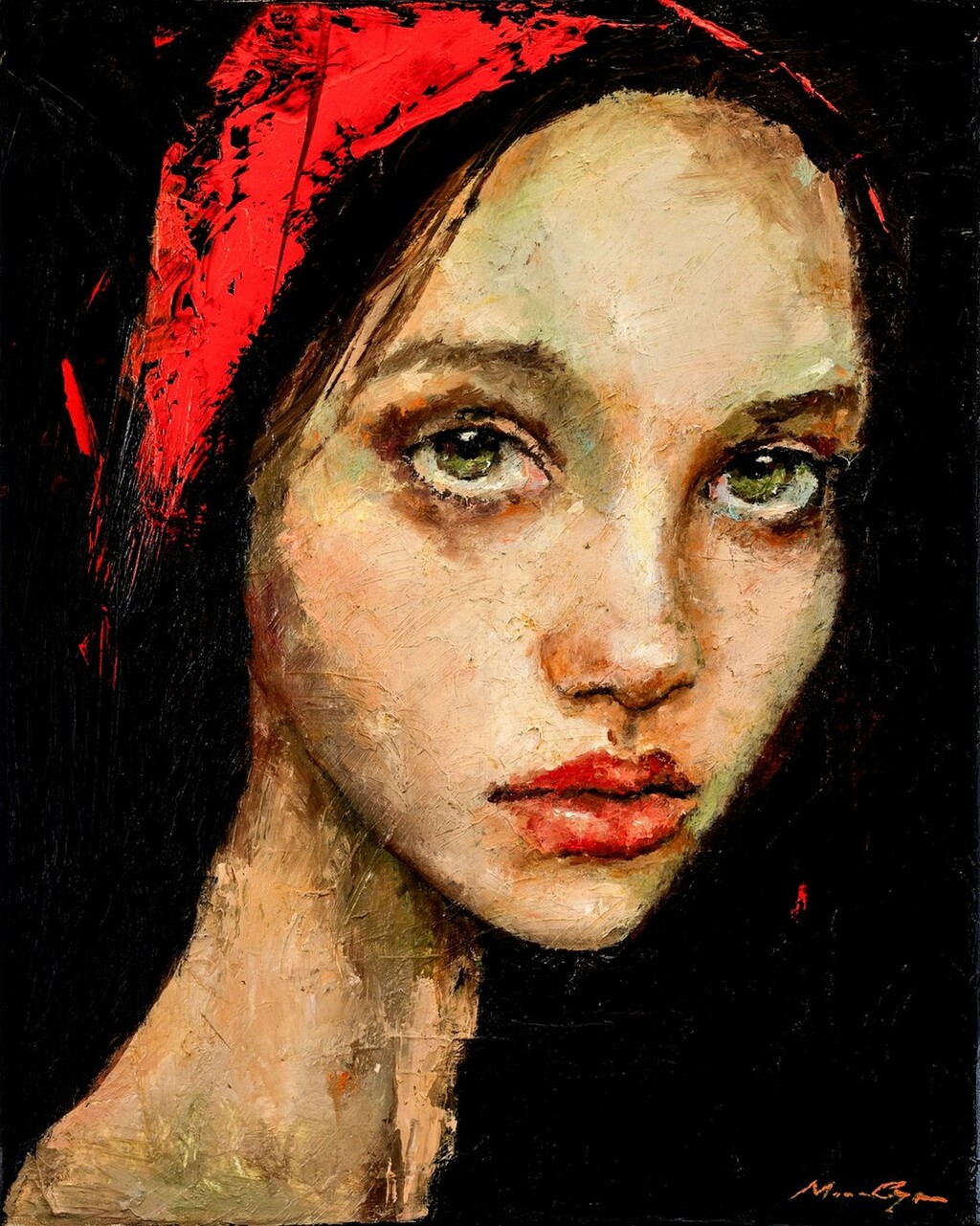
In the work "Chapter 10: We Are..." (2024), Miruna Cojanu presents a captivating portrait through a combination of impeccable technique and emotional intensity, inviting the viewer into an intimate space of human emotion, identity, and inner conflict. Executed in oil on canvas and measuring 50 x 40 cm, this painting draws viewers into an intimate and introspective world, capturing the essence of human fragility in a manner that is both subtle and unsettling.
This work, part of a broader series suggested by its chapter-based title, opens up the possibility of a sequential narrative in which the artist explores recurring themes of identity and self-revelation. The fact that the title includes the phrase "We are..." emphasises the idea of a collective or universal quest, echoing fundamental questions about who we are and what defines us. Cojanu’s use of ellipses leaves the sentence incomplete, prompting the viewer to ponder what follows, reflecting the notion that identity is never fixed but is in a state of continuous evolution.
Cojanu’s mastery lies in her ability to focus the viewer's attention on the emotional intensity of her subject while maintaining a sense of mystery. The female figure, centrally placed on the canvas, is enveloped in a deep black background, which serves not only to isolate the figure but also to amplify the emotional weight of the work. This silent backdrop becomes a metaphysical space, a void in which thoughts, emotions, and the human psyche coexist.
The technique employed in rendering the figure is particularly noteworthy. By using the impasto technique, Cojanu gives the surface of the painting a tactile, almost sculptural quality. This approach lends the work a strong "physical" dimension, where the painted surface becomes an integral part of the emotional expression. The impasto serves as a metaphor for the depth of the subject's emotional experience, highlighting the psychological complexity rooted in her expression.
At the heart of the painting are the eyes—large, clear, and full of intensity. This captivating detail seems to both confront and withdraw from the viewer, conveying a dual sense of engagement and hesitation. The eyes become the emotional focal point of the work, and their precise rendering creates a tension that reflects the unspoken thoughts and feelings of the figure. There is a profound vulnerability in their openness, yet also a silent strength, as if the subject bears the weight of unseen burdens without completely yielding to despair.
In contrast, the mouth—delicately outlined and slightly ajar—suggests hesitation. It implies unspoken words and restrained emotions, and the ambiguity of this expression deepens the emotional complexity of the piece. In this way, Cojanu manages to convey a fragile balance between vulnerability and strength through subtle gestures.
Of particular significance is the red scarf that crowns the head of the female figure, whose vibrant hue violently contrasts with the more natural tones of the skin. Red, a universal symbol of passion, energy, and even danger or anger, amplifies the visual and emotional tension. This chromatic detail adds unexpected dynamism to the scene and gives the portrait an additional narrative dimension. The dark background intensifies this tension, creating an atmosphere of introspection and isolation, where light and darkness coexist symbolically.
Aesthetically, Miruna Cojanu blends influences from modernist and expressionist art while maintaining a grounding in the figurative. The elongated neck and slightly distorted features create a sense of distancing from pure realism, suggesting that the image is more a reflection of an emotional universe than a faithful representation of reality. This subtle manipulation of proportions reflects the artist's ongoing search for new ways to express the self and the fragility of humanity.
Another significant aspect of the work is the dialogue between light and darkness, both chromatically and symbolically. The figure, although discreetly illuminated by the pale light reflecting off the skin, appears to be engulfed by the black background, suggesting a complete immersion in her inner world, an introspection that consumes everything. This interplay of the two opposing forces—light and darkness—speaks to human duality, the balance between vulnerability and resilience, and how these opposites define human existence.
Cojanu’s work, "Chapter 10: We Are...", is not merely a portrait of a solitary figure; it is a meditation on identity, both personal and collective. The incomplete title encourages the viewer to finish the sentence, projecting their own understanding of what it means to "be". This painting thus becomes a mirror for the viewers' introspections, allowing them to engage in a silent dialogue with the artwork.
The use of a minimalist composition, with the figure isolated against an undefined background, invites contemplation. There is no distracting background or narrative frame, which enables the viewer to focus exclusively on the emotional presence of the figure. This minimalist approach, combined with Cojanu’s sophisticated manipulation of texture and form, lends the painting a depth that resonates on multiple levels, both visually and emotionally.
In conclusion, Miruna Cojanu’s work, "Chapter 10: We Are...", is a deeply layered creation that transcends traditional boundaries of portraiture. Through her masterful use of texture, colour, and form, Cojanu invites the viewer to engage in profound contemplation of human existence, identity, and emotional complexity. The tension between fragility and strength, between light and shadow, creates a powerful visual metaphor for the inherent contradictions of the human being. Cojanu’s work does not offer simple answers; instead, it encourages us to reflect on our identities and how we navigate the complexities of our inner lives. This piece, like many of the artist’s creations, invites us to contemplate not only external beauty but also the emotional complexity that defines the human condition.
